“Pay for results” sounds simple until you have to define the result. A lead, a sale, a subscription and a share of lifetime revenue are four very different promises, and each one pushes your marketing partner towards different behaviour. Here is how to choose — with one example product priced four ways and a calculator for your own numbers.
Where in the funnel each model pays
Every model is simply a decision about which step of your funnel triggers the payment. The deeper the step, the closer the payment is to your revenue — and the fewer events there are to pay for.
- LeadCPL · fixed $ per lead
- ActionCPA · fixed $ per action
- SaleCPS · $ or % per saleRevShare · % of every payment
- RenewalsRevShare · % of every payment
The four models at a glance
| Model | You pay for | Price per event | Main risk for you | Works best for |
|---|---|---|---|---|
| CPL | A contact: form, sign-up, booked call | $ · lowest | Plenty of leads, few customers | B2B, high-ticket services, long sales cycles |
| CPA | A specific action: trial, install with registration, first deposit | $$ | Actions that never turn into revenue | Apps, SaaS trials, freemium products |
| CPS | A completed purchase — fixed amount or % of order | $$$ · highest | Slow start: the partner needs time to learn | E-commerce, low-ticket one-off purchases |
| RevShare | A % of the revenue each customer brings, often for months | % of revenue | Paying a share for a long time | Subscriptions with solid retention |
Who carries the risk
Pricing models are really a way to split risk. With CPL you pay for every lead even if nobody buys; with RevShare the partner pays for the media and waits for your customers to pay you.
- CPL
- CPA
- Hybrid
- CPS
- RevShare
lower price per eventPartner carries more risk →
higher price, paid later
One product, priced four ways
Let’s take one example: a subscription app at $20 per month with 12% monthly churn. In one month the campaign brings:
Now the same result priced under each model. The rates are illustrative, set so that the partner earns more the more risk it takes:
| Model | Rate | Events paid | Total cost | Per paying customer |
|---|---|---|---|---|
| CPL | $4 per lead | 1,000 | $4,000 | $28.57 |
| CPA | $11 per trial | 400 | $4,400 | $31.43 |
| CPS | $35 per first payment | 140 | $4,900 | $35.00 |
| RevShare | 40% of revenue, 12 months | ≈ 915 payments | $7,320 | $52.29 |
| Hybrid | $6 per trial + 20% of revenue, 12 months | 400 + payments | $6,060 | $43.29 |
On paper CPL looks cheapest. But the table assumes the funnel holds. What happens if the traffic quality slips and only half as many trials turn into paying customers (70 instead of 140)?
| Model | Per paying customer, normal | If quality drops by half | Who absorbed the drop |
|---|---|---|---|
| CPL | $28.57 | $57.14 | You |
| CPA | $31.43 | $62.86 | You |
| CPS | $35.00 | $35.00 | Partner |
| RevShare | $52.29 | $52.29 | Partner |
| Hybrid | $43.29 | $60.43 | Shared |
That is the real trade-off: early-funnel models are cheaper when everything goes to plan and expensive when it doesn’t. Deep-funnel models cost more per customer but protect your margin.
Calculate it for your funnel
Enter your own funnel and the rates you were offered. The calculator prices one month of results under each model and shows the cost per paying customer.
Estimate only, based on the inputs above. Real results depend on your product, market and traffic.
Why hybrid models usually win
A pure RevShare deal shifts all the cash-flow risk to the agency: it pays for media today and earns back over months. That limits how aggressively it can scale. A pure CPA deal, on the other hand, ignores what happens after the first payment, so a partner can hit the number with customers who churn in week two.
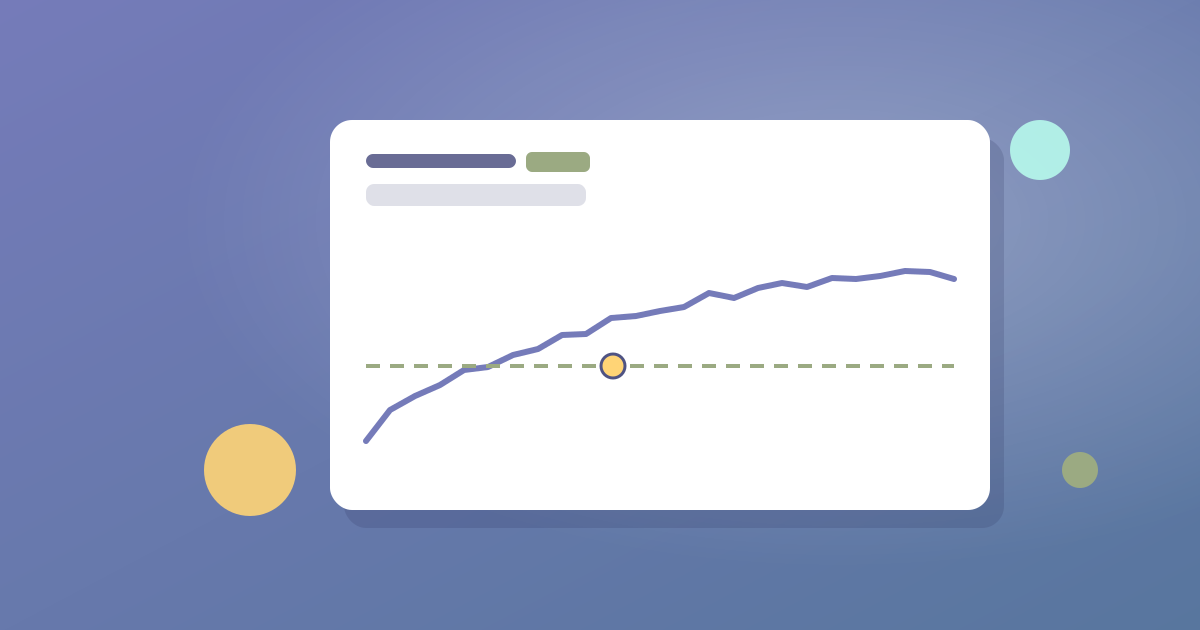
The chart shows the same example from the partner’s side — how much it has been paid, month by month:
A hybrid — a modest fixed payout per action plus a revenue share — solves both problems. The fixed part funds testing and scale; the revenue part rewards quality. For digital subscription products it is usually the fairest arrangement for both sides.
Match the model to your funnel, not to fashion
The right model is the deepest event that still happens often enough to optimise against. Ad platforms and media buyers need volume: roughly a few dozen conversions per week per campaign before the algorithms stabilise. If your sales cycle is long, paying per sale will starve the optimisation loop, and everyone will be guessing.
| Your product | Start with | Then move to |
|---|---|---|
| E-commerce, low-ticket apps (short cycle, simple checkout) | CPA on purchase | CPS once volume is stable |
| Free trial or freemium | CPA on trial start with a quality filter (e.g. trial reaches day 3) | Hybrid CPA + RevShare |
| Subscriptions with good retention | Hybrid: fixed payout + share of recurring revenue | Higher RevShare share as data grows |
| B2B and high-ticket services | CPL with strict qualification criteria | CPA on “qualified meeting” |
Define the action precisely
Most disputes in performance marketing are not about price; they are about definitions. Before launch, write a one-page spec like this:
| Term | Example definition |
|---|---|
| Paid event | Trial started with a valid card, confirmed by your billing system |
| Source of truth | Your backend or payment provider — not the ad platform |
| Invalid conversions | Duplicates (same email, card or device), refunds within 14 days, chargebacks, fraud signals |
| Validation window | 14 days to reject a conversion, with a reason |
| Rate changes | Reviewed monthly if conversion rate or pricing moves by more than 20% |
Ten lines of clear definitions save weeks of arguing later.
A quick decision checklist
- Which event in your funnel correlates best with revenue?
- Does it happen at least several hundred times a month at your target scale?
- Can it be tracked server-side and confirmed by your own system?
- Do you know your margin on it, so you can set a payout that still leaves profit? (Our max CPA guide shows how.)
If the answer to all four is yes, that event is your CPA. If the second answer is no, move one step up the funnel and add a quality filter. If you sell subscriptions, consider adding RevShare on top.
Want results you only pay for?
Let’s advertise your project.